

Key Takeaways
-
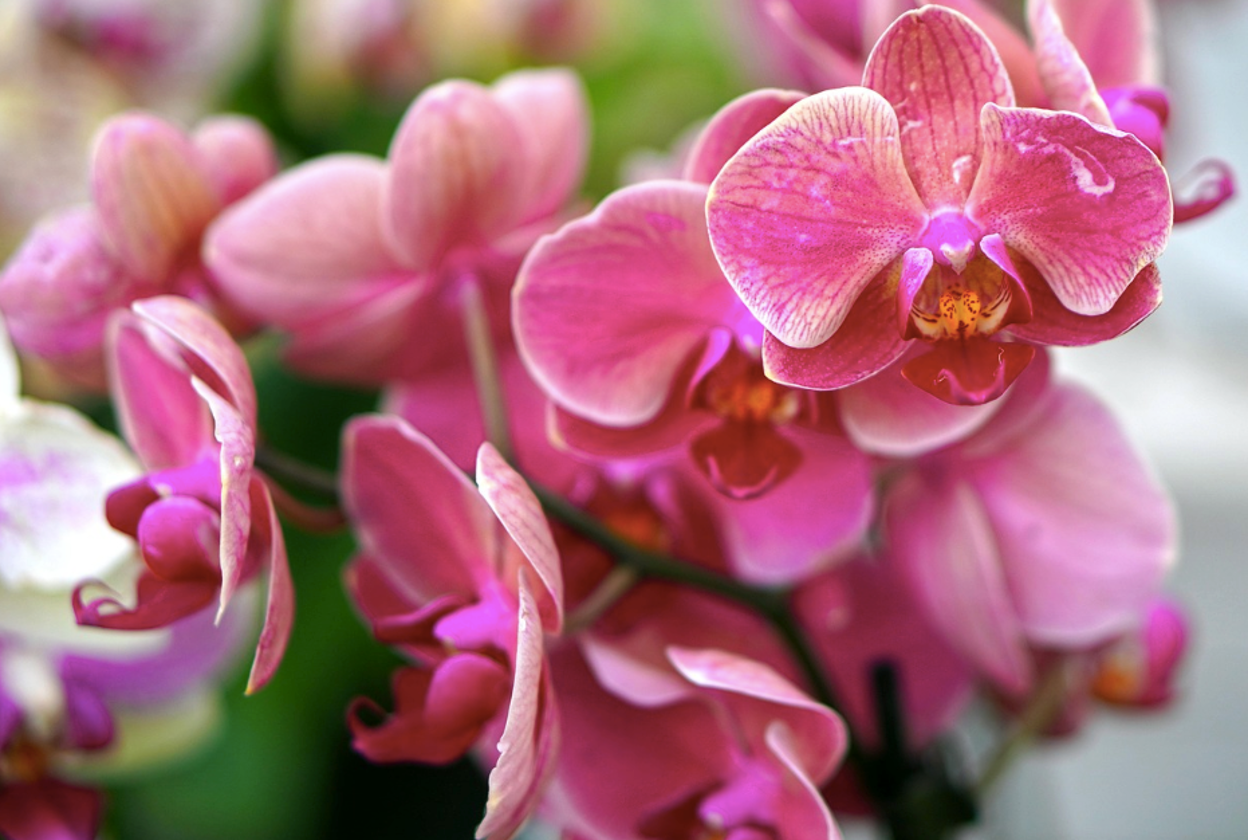
Orchids don't die after blooming; they enter a natural rest period, and with the right care, they can rebloom reliably every year.
-
The main reason orchids refuse to rebloom is insufficient light; most people keep them in rooms that are too dim.
-
A nighttime temperature drop of 10–15°F for 2–4 weeks is often the secret trigger that initiates a new flower spike.
-
Fertilizing at quarter-strength every 2–4 weeks provides orchids with the nutrients they need without burning delicate roots.
-
GS Plant Foods offers several organic products formulated to stimulate orchid reblooms, including Orchid Love, Flower Power, and Grower’s Honey. Our products are organic, eco-friendly, and non-toxic, and are safe for both pets and children.
Your Orchid Isn't Dead, It's Resting
Orchids typically enter a vegetative growth phase of several months after flowering to rebuild energy reserves for new growth. While the plant may appear inactive, it is not dormant; green leaves and active roots indicate it is still processing nutrients. To trigger a new bloom cycle, orchids require bright indirect light, consistent watering, and specialized organic fertilizers like Orchid Love to replenish lost minerals.
The primary reasons orchids fail to rebloom are insufficient light and the lack of a nighttime temperature drop. For most varieties, such as Phalaenopsis, a 10–15°F dip in temperature for up to four weeks is the biological signal needed to initiate a new flower spike. Combining this environmental shift with proper pruning of spent spikes ensures the plant redirects its energy toward vibrant new blossoms.
|
GS Plant Foods: Organic Fertilizers That Actually Work 12+ Years Proven Results | Trusted by 1M+ Customers | Pet & Kid-Safe
Grow Naturally Without Compromise:From bestselling Liquid Fish to proprietary blends like Green Envy, GS Plant Foods delivers professional-grade nutrition using kelp, humic acid, and seaweed extracts. Whether you're nurturing orchids, reviving your lawn, or caring for houseplants, their organic formulas absorb faster and reduce runoff—giving you visible results without harsh chemicals. Why Gardeners Choose GS:
Your plants deserve nutrition that works as hard as you do. |

How Do I Get My Orchid to Rebloom?
Give It the Right Amount of Bright, Indirect Light

Orchids need at least 6 hours of bright, indirect light per day.
Orchids need bright, indirect light for at least 6 hours per day. An east-facing windowsill is ideal. A south or west-facing window with a sheer curtain works well, too. Avoid placing them on a shelf in the middle of a room, in a north-facing window, or anywhere more than 3 feet from a natural light source.
The leaves tell you everything. Medium green means the light level is right. Dark green means not enough light. Yellowing with a reddish tinge means too much direct sun. Adjust accordingly, and give the plant at least 4 weeks in the new spot before expecting a response.
Water Correctly
Orchids grown in bark mix need water only when the top inch of the medium feels dry, and the roots inside the pot have faded from green to silvery-white. For most homes, that means watering every 7 to 10 days.
In winter, when indoor heating runs constantly, you may need to water slightly more often. In humid summer months, it should be less frequent. Always let the medium approach dryness between waterings rather than keeping it consistently moist.
Drop the Nighttime Temperature to 55–65°F
Phalaenopsis orchids need a temperature differential of 10–15°F between day and night for a period of 2 to 4 weeks to initiate a new flower spike.
To create a nighttime temperature drop, move the orchid to a windowsill in autumn and place it in a cooler room at night (a spare bedroom, sunroom, or an enclosed porch that isn't heated). Open a nearby window slightly in fall evenings when outdoor temps drop into the 50s, and avoid placing orchids near heating vents, which maintain artificially warm air.
Once you see a new spike emerging, bring the plant back to its normal warm spot and keep conditions consistent from then on.
Fertilize at Quarter Strength Every 2–4 Weeks
Orchids are light feeders, but they are not zero feeders. Feed at one-quarter of the recommended dose on a consistent schedule rather than giving occasional heavy doses, which can burn the delicate root system and set the plant back significantly. During the active growing season (spring through early fall), feed every two weeks. In winter, scale back to once a month.
Trim the Spent Flower Spike the Right Way
If the spike has turned completely brown and dry, cut it off at the base using sterile scissors or pruning shears. This redirects all the plant's energy away from maintaining a dead structure and toward building roots, leaves, and, eventually, a brand-new spike.
However, if the spike is still green with no visible buds, you have a choice. You can leave it in place, and it may produce a secondary bloom from a node along the spike. Or you can cut it at the base to encourage the plant to generate an entirely new spike, which takes longer but usually produces a fuller, more vigorous bloom.
What Fertilizers Help Orchids Rebloom?
Not all fertilizers work the same way for orchids. The three GS Plant Foods products below are specifically formulated with orchids and blooming plants in mind.
Each one targets a different aspect of the reblooming process, and used in rotation, they cover all the nutritional bases your orchid needs to go from resting to reblooming reliably.
1. GS Plant Foods’ Orchid Love

Orchid Love contains humic acid and other blooming agents.
Most orchid fertilizers on the market provide only basic NPK nutrients, which can keep plants alive but often fall short of triggering the repeat bloom cycles that growers really want. GS Plant Foods’ Orchid Love takes a fundamentally different approach by combining organic kelp, liquid fish, and humic acid with dedicated blooming and rooting agents.
It delivers nutrition, natural bio-stimulants, and growth hormones that orchids need to flower prolifically season after season. Plus, it’s easy to use. Simply mix 1–2 oz per gallon and use every watering.
The liquid kelp is rich in micronutrients that reduce plant stress and accelerate blooming, while the liquid fish provides organic nitrogen for robust foliage and root development. Its all-natural, low-salt formulation eliminates the risk of root burn, making it safe for all orchid varieties, including Phalaenopsis, Cattleya, Dendrobium, Oncidium, and Vanda.
2. GS Plant Foods Flower Power

Flower Power contains organic kelp and trace minerals.
Flower Power takes a broader approach to bloom-boosting nutrition, built on a base of organic fish, kelp, and ocean plant extracts that deliver a wide spectrum of micronutrients, enzymes, and chelating agents for rapid plant absorption. While not orchid-specific like Orchid Love, its formulation is well-suited to orchid growers who also maintain mixed flowering collections and want a single concentrate that performs across the board.
The organic fish and kelp base provides a steady supply of nitrogen and trace minerals that support root strength, foliage health, and flower development without the salt buildup associated with synthetic alternatives.
It also contains beneficial microbes that enrich the growing medium with nitrogen-fixing bacteria and improve mineral uptake at the root zone, which can be particularly valuable for orchids potted in bark-based mixes where nutrient retention is naturally low. To use, simply mix 1–2 oz per gallon and apply monthly as a soil drench or foliar spray during blooming.
3. GS Plant Foods Grower's Honey

Grower’s Honey can be applied every 1–2 weeks.
Grower's Honey approaches orchid nutrition from a different angle than traditional bloom-boosting fertilizers. Rather than relying solely on NPK ratios to drive flowering, its formulation centers on 18 L-amino acids derived entirely from plant-based proteins.
By supplying these amino acids in a pre-formed state, Grower's Honey allows orchids to redirect the energy they would normally spend manufacturing amino acids internally toward root development, leaf health, and flower production instead.
The supporting NPK ratio of 4-3-3 is deliberately moderate, providing a steady baseline nutrition without the risk of overfeeding that can stall orchid flowering cycles. To use, mix 3 oz per gallon and apply every 1–2 weeks during active growth.
Best Fertilizers to Trigger Orchid Reblooms: Summary Table
|
Feature |
Orchid Love |
Flower Power Concentrate |
Grower's Honey |
|
Product Type |
Orchid-specific fertilizer |
All-purpose bloom booster |
Amino acid fertilizer |
|
NPK Ratio |
1.19-1.06-0.39 |
Not specified (organic base) |
4-3-3 |
|
Key Ingredients |
Organic kelp, liquid fish, humic acid, rooting & blooming agents |
Organic fish, kelp, ocean plant extracts, beneficial microbes |
18 L-amino acids from plant proteins |
|
Base Material |
Organic kelp & fish |
Organic fish & kelp |
100% plant-based protein & water |
|
Bloom Support |
Dedicated blooming & rooting agents |
Anti-aging formula prolongs bloom cycles |
Amino acids redirect energy to flowering |
|
Soil Health |
Humic acid supports soil vitality |
Nitrogen-fixing bacteria enrich growing medium |
Improves nutrient uptake efficiency |
|
Orchid Varieties |
All — Phalaenopsis, Cattleya, Dendrobium, Oncidium, Vanda |
All flowering plants including orchids |
All plants including orchids |
|
Best For |
Orchid growers focused on repeat blooming and root health |
Mixed flowering collections needing versatile bloom support |
Growers seeking improved plant metabolism and energy-efficient flowering |
Find Your Bloom with GS Plant Foods Non-Toxic Formulations
Whether you choose Orchid Love, Flower Power, or Grower's Honey, every GS Plant Foods product shares the same core principle: organic, non-toxic ingredients that deliver real results without harsh chemicals. Our formulations are safe around children, pets, and pollinators, gentle on delicate orchid root systems, and designed to work with your plant's natural biology rather than override it.
Everything we make is rooted in a lifelong passion for plants and shaped by years of trial and discovery. Our journey started when we couldn't get a single orchid to rebloom—until we discovered natural ingredients like organic kelp and liquid fish. The results were transformative, and that moment sparked an intensive study of organic plant nutrition that has grown into an ever-expanding line of products now trusted on lawns, gardens, golf courses, ranches, and farms across America.
Every order ships with free delivery, so you can start feeding your orchids without delay or added cost. Give your collection the nutrition it needs to bloom bigger, last longer, and come back stronger season after season.
Check out our bloom-boosting products today!
Frequently Asked Questions (FAQs)
Why won't my orchid rebloom even with proper care?
The most likely causes are insufficient light and the absence of a nighttime temperature drop. Even orchids receiving adequate water and fertilizer will stall indefinitely if the light is too dim or the temperature stays consistently warm around the clock.
It is also worth checking the roots. If the roots inside the pot are brown, mushy, or have largely rotted away, the plant does not have the physical infrastructure to support a new spike, regardless of what you do on the surface.
Should I cut the orchid flower spike after blooms fall off?
It depends on the condition of the spike. A brown or yellowing spike should be cut at the base since it is no longer viable and drains energy the plant could use for new growth.
However, a green spike gives you two options: leave it and potentially get a secondary bloom from a side node within a few months, or cut it at the base to push the plant toward generating a fresh, more vigorous spike from the crown.
How many times a year can a Phalaenopsis orchid bloom?
Under ideal indoor conditions, a healthy Phalaenopsis can bloom once or twice per year, with each bloom period lasting 8 to 16 weeks. With consistent care and deliberate temperature manipulation, some growers successfully trigger two full bloom cycles per year.
Do orchids need to be repotted to rebloom?
Not always, but sometimes, repotting is exactly what the plant needs. Orchids should generally be repotted every 18 to 24 months, or when the bark medium has broken down into a dense, soggy mass that no longer drains freely.
How effective is GS Plant Foods Orchid Love for reblooming?
GS Plant Foods’ Orchid Love is formulated to trigger repeat bloom cycles using a combination of organic kelp, liquid fish, humic acid, and dedicated blooming agents that deliver the natural bio-stimulants and growth hormones orchids need to produce new flower spikes season after season.
Its gentle, low-salt formula nourishes roots, leaves, and spikes without the risk of root burn, making it safe for all orchid varieties including Phalaenopsis, Cattleya, Dendrobium, Oncidium, and Vanda.
*Disclaimer: This information is for educational purposes only. Always follow product label instructions and consult with qualified professionals for advice specific to your region, climate, and growing conditions. Individual results may vary based on environmental factors, soil conditions, plant species, and care practices. For specific product recommendations and application rates, visit GS Plant Foods.


Share:
How GS Plant Foods Powered a 2,161-Pound Giant Pumpkin from Record-Breaking Harvest to Incredible Sculpture
Best Fertilizer for Grass After Winter: NPK Ratios & How to Use