

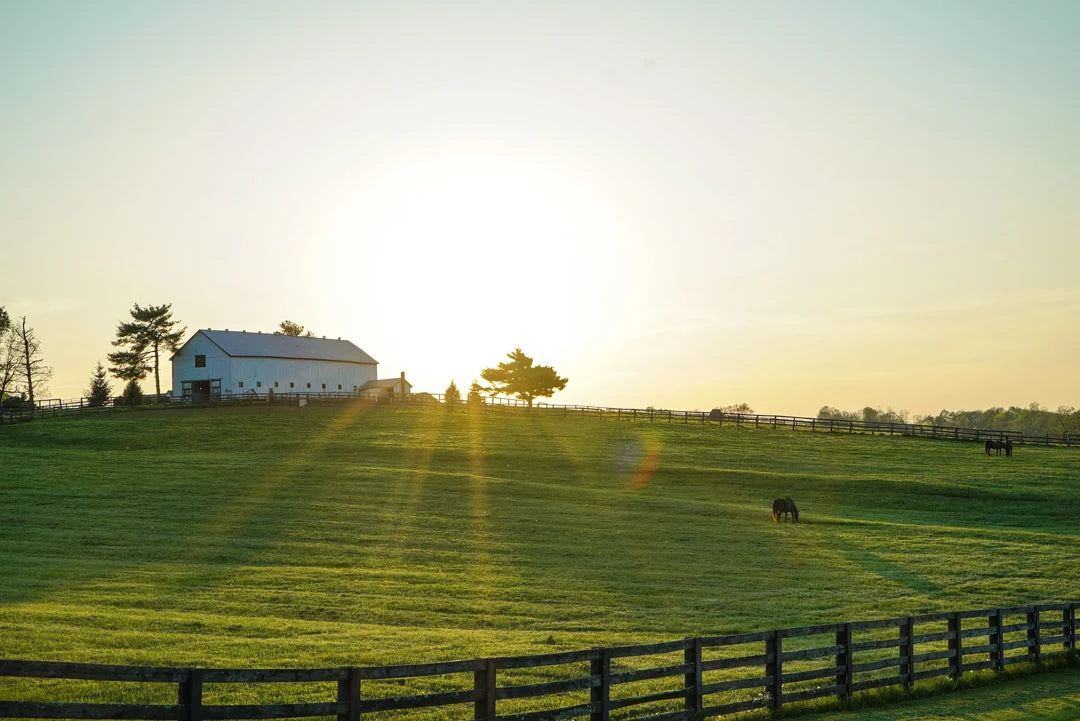
To improve a thin cattle pasture, check for overgrazing and compacted soil before buying more nitrogen. Dig beside a healthy patch and a thin one to see where the roots stop. Fall humic and kelp applications may support existing grass, but they cannot replace seed or correct continued grazing on wet ground.
In northern and transitional regions, October and early November can be a window for supporting cool-season grass roots before dormancy. This is a soil-conditioning job, not a seeding shortcut. Southern warm-season pastures follow a different growth cycle, so base timing on your forage species rather than the calendar alone.
How Does Hoof Traffic Create a Compacted Layer Under Pasture?
Repeated hoof traffic on wet soil can create a dense layer beneath the sod. Damage often concentrates around gates and watering points, where cattle cross the same ground repeatedly. UMN Extension's guidance on cattle grazing also identifies uneven pasture use and trampling losses as problems with continuous grazing.
Roots struggle to push through that packed layer, and water moves through it more slowly than it should. Thin grass above it may look hungry.
Fertilizer alone cannot restore the rooting space the stand needs. A patch that thins over a hard layer usually needs the soil opened up before more feed shows up as grass.
How Can You Tell If Your Pasture Has a Compaction Layer?
Compare healthy grass with a thin patch before deciding the whole field needs the same treatment. A spade-deep slot lets you inspect the roots and soil together.
- Dig in several locations, including healthy grass and heavily traveled ground.
- Look for roots that stop or turn sideways where the soil becomes hard and platy.
- Compare the depth and structure across those locations. A dense layer that coincides with restricted roots points toward compaction, though thinning can have other causes.
- Send a soil sample for analysis before buying inputs. Check pH and the lab's nutrient recommendations, along with organic matter where included.
Low pH can limit forage growth even when nutrients are available. Put the soil report beside your field notes, and ask your county extension office for help if the results don't explain what you're seeing.
Why Does a Pasture Stay Thin After Years of Fertilizer?
Nitrogen cannot fix compaction or repeated overgrazing. It is a major driver of forage yield, but efficient use matters, as the USDA Agricultural Research Service's U.S. Dairy Forage Research Center explains. Restricted roots limit access to water and nutrients even when fertilizer is applied regularly.
Grazing too close creates a separate problem. USDA ARS work comparing 2-inch and 4-inch residuals in cool-season pasture grasses documents the consequences of close grazing for stand persistence. Those heights are research comparisons, not a universal prescription: choose residual height for your forage species and conditions rather than grazing until the soil shows.
Can You Apply Liquid Humic or Kelp While Cattle Are Grazing?
The product label determines how to apply it around grazing animals. Check the rate and mixing directions, then look specifically for grazing or re-entry instructions. If those instructions are missing, ask the manufacturer rather than assuming the field can remain occupied. For our products, use the GS Plant Foods contact page to ask before you spray.
Ground conditions come first. Cattle on saturated soil can cut the sod and worsen compaction. Move them to a suitable dry paddock or sacrifice area until the field firms up; a conditioner cannot offset continued hoof damage.
- Follow the label's application and grazing directions.
- Keep application equipment off saturated ground.
- Record the product and rate, along with the application date and field, for comparison next season.
What Can Humic and Kelp Do for Roots Before Winter?
Cool-season perennial grasses build root and crown reserves before dormancy. If you're applying a supporting input in fall, aim for active growth before a hard freeze, not dormant grass or frozen soil.
Our Organic Liquid Kelp Seaweed supports root development and stress tolerance, while Organic Liquid Humic Acid is a soil amendment intended to support nutrient uptake and root-zone health. Neither replaces missing plants or a grazing plan that allows recovery.
The sources reviewed here do not establish how much these inputs improve spring pasture density or winter survival. Treat them as supporting inputs, not guaranteed stand repairs, and compare treated ground with an untreated area under similar management.
What Does Fall Conditioning Cost Per Acre Compared With Dry Fertilizer?
There isn't one reliable per-acre price without a product rate and a delivered quote. Calculate each program from its label rate, then add application costs. A lower-volume liquid is not automatically cheaper, and a soil conditioner is not a direct substitute for nutrients a soil test shows you need.
Use the same acreage and account for every application in both estimates:
| Cost item | Liquid conditioning program | Dry fertilizer program |
|---|---|---|
| Product cost per acre | Label rate per acre times price per matching unit | Pounds per acre divided by 2,000, then multiplied by price per ton |
| Application cost per acre | Fuel, labor and sprayer operating costs | Fuel, labor and spreader operating costs |
| Timing | Follow the label and target active growth | Match nutrient timing to forage needs and local recommendations |
| Results to compare | Forage dry matter yield and stand condition over two seasons | Forage dry matter yield and stand condition over two seasons |
Compare forage yield on a dry matter basis rather than fresh weight, as UW-Madison Extension explains in its carrying-capacity guidance. Moisture differences can make one harvest look heavier without providing more feed.
How Do You Plan a Fall Pasture Program That Keeps Cattle Grazing?
Fit applications around recovery periods, not the other way around. UW-Madison Extension describes managed grazing through rotation, residual and rest, with carrying capacity set correctly for those practices to work.
- Start with a soil test and root inspection. Identify whether the immediate limit is fertility, compaction or grazing pressure.
- Check forage supply against herd demand. UW-Madison uses roughly 3% of livestock body weight in dry matter per day as a planning estimate; actual needs vary.
- Move cattle off saturated ground before hoof traffic damages the sod.
- Apply any selected conditioner during active growth, following its label and grazing instructions.
- Avoid heavy late-season nitrogen that the stand cannot use before dormancy.
- Leave a species-appropriate residual and enough recovery time before grazing again.
Bare patches need a separate establishment plan. Seed needs suitable timing and seed-to-soil contact; spraying a conditioner does not provide either. Don't combine overseeding and spraying simply to save a pass without checking the seed and product guidance.
Where Does the Hay & Pasture Farm Program Fit?
Our Hay & Pasture Farm Program provides a targeted fertilization schedule for pasture and hay fields, designed to support forage density and soil longevity. Use it alongside your soil results and grazing plan, not instead of them.
GS Plant Foods offers bulk sizes, including 55-gallon drums and 275-gallon totes, with free shipping on all products. Choose volume only after calculating the labeled rate for the acres you intend to treat.
If thinning extends beyond a few patches, or you cannot identify a weed or disease problem, consult an extension agronomist or forage specialist before committing to field-wide treatment. Once you've identified the field's needs, send your acreage and product questions through our contact page to discuss program sizing.
Frequently asked questions
When should I apply soil conditioners to pasture in the fall?
For cool-season pasture, target active growth before a hard freeze and apply only when ground conditions support equipment. Follow the product label, including any grazing restrictions. Warm-season forage requires timing based on its own growth cycle.
Can I overseed and apply a liquid soil conditioner on the same day?
Don't assume the two jobs belong together. Check the product directions and your forage establishment recommendations before combining applications. Seed needs suitable planting conditions and seed-to-soil contact regardless of any conditioner used.
Will liquid humic acid help pasture grass come back thicker in spring?
Humic acid can support soil and root-zone function, but the sources reviewed here do not establish a spring-density improvement in pasture. It cannot replace missing grass or correct continued overgrazing. Compare treated and untreated areas under similar conditions to assess its value.
Why is my pasture thin even though I fertilize it every year?
Compaction or grazing too close may be limiting recovery rather than a shortage of fertilizer. Dig beside healthy and thin patches to compare rooting depth, then use a soil test to check pH and nutrient needs. Widespread thinning warrants a forage specialist's assessment.
Does liquid kelp help cool-season grasses survive winter?
Our liquid kelp is intended to support root development and stress tolerance, but that does not establish a winter-survival benefit in pasture. The sources reviewed here do not confirm that outcome. Protecting residual growth and keeping cattle off saturated ground remain priorities before winter.

Share:
Liquid Fish Hydrolysate vs Emulsion: How to Read the Label
Best Soil for Indoor Plants: What Holds Up in Winter Heat