

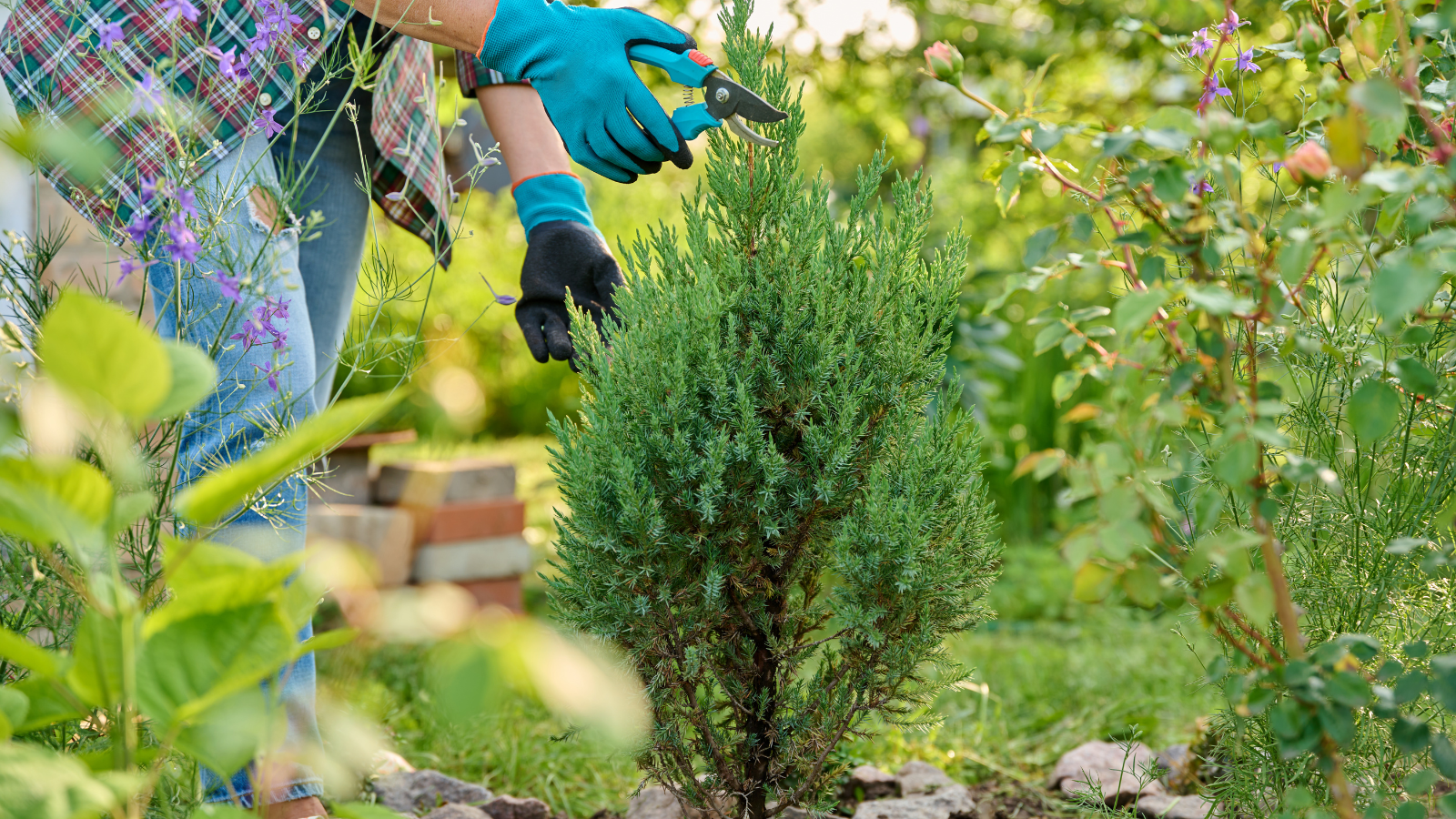
Evergreens are the steadfast backbone of any great landscape. While they are famously low-maintenance, keeping your conifers—like pines, spruces, firs, and junipers—looking lush, vibrant, and resilient requires a little targeted nutrition.
If you’ve noticed thinning needles or dull color, you’re not alone; it’s a common issue that usually comes down to soil health and available nutrients.
Do Your Evergreens Actually Need Fertilizer?
Conifers are hardy, but they aren't invincible. Before you start pouring nutrients into the soil, it helps to know if your tree actually needs a boost.
Signs your conifer needs fertilizing:
-
Pale or Yellowing Needles: A classic sign of nitrogen or iron deficiency.
-
Stunted Growth: If the new spring growth (the "candles") is unusually short compared to previous years.
-
Excessive Needle Drop: While interior needle drop is natural in the fall, heavy shedding on outer branches indicates stress.
-
Poor Soil Conditions: Sandy or highly compacted clay soils often lack the essential nutrients evergreens need to thrive.
Newly planted conifers should generally not be fertilized during their first year.
Focus on deep watering to help them establish strong roots instead; fertilizing too early can cause root burn.

Timing is Everything: When to Fertilize
The timing of your application is just as important as the fertilizer you choose.
| Season | Recommendation | Reason |
| Early Spring | Best | Apply just before new growth begins (usually late March to mid-April) to fuel the spring flush of needles. |
| Late Fall | Good | Apply after the tree has gone dormant. Roots will absorb nutrients and store them for the following spring. |
| Late Summer | Avoid | Fertilizing now can trigger late, tender growth that will easily be damaged by upcoming winter frosts. |
Choosing the Right Fertilizer
Evergreens generally prefer a balanced fertilizer or one slightly higher in Nitrogen (the "N" in the N-P-K ratio) to support their dense foliage.
While granular slow-release fertilizers are common, organic liquid fertilizers and soil conditioners are incredibly effective because they feed the soil microbiome and provide immediately available nutrients without harsh synthetic chemicals.
If you prefer organic, eco-friendly approaches, GS Plant Foods makes several excellent, real-world products that are highly beneficial for conifers:
-
GS Plant Foods Organic Fish & Kelp Liquid Blend: This is a powerhouse for evergreens. It combines fresh fish hydrolysate and kelp to boost chlorophyll levels (resulting in deeper green needles) and promotes robust root development. It also helps plants handle environmental stressors like extreme heat, drought, or cold.

-
GS Plant Foods Organic Liquid Kelp Seaweed: Extracted from cold-processed Norwegian seaweed, this OMRI-certified product is loaded with trace minerals, amino acids, and natural growth hormones. It acts as a bio-stimulant, encouraging deep root systems and improving soil aeration.

-
Liquid Love - All Purpose Natural Plant Food: This complete bio-active blend of kelp, humic acid, and fish hydrolysate can be used as a soil drench or a foliar spray. It is fantastic for reviving yellowing needles and increasing the plant's overall resilience without the risk of burning the roots.

How to Apply Liquid Fertilizer to Conifers
If you are using an organic liquid concentrate like those from GS Plant Foods, the application process is very straightforward.
-
Find the Drip Line: The critical root zone of a conifer extends to its "drip line"—the area on the ground directly beneath the outermost tips of the branches.
-
Dilute the Concentrate: Follow the bottle instructions carefully. For example, you typically mix 2 ounces of the Fish & Kelp blend per gallon of water for outdoor trees and shrubs.
-
Apply Evenly: Use a watering can or a hose-end sprayer to saturate the soil evenly around the entire drip line. Don't just pour it against the trunk; the feeder roots are located further out.
-
Consider a Foliar Spray: For a quick nutrient boost, you can spray diluted organic liquid fertilizer directly onto the needles (top and bottom) early in the morning before the sun is too intense.
-
Water Deeply: If applying to the soil, give the tree a good, deep watering afterward to ensure the nutrients penetrate down to the root zone.
Conclusion
Fertilizing your conifers doesn't have to be a guessing game.
By paying attention to the signs of nutrient deficiency, timing your application for early spring or late fall, and using high-quality organic options like GS Plant Foods, you can ensure your evergreens remain a vibrant, healthy staple in your landscape for decades to come.


Share:
Liquid Kelp for Plants: Benefits, Application & Where to Buy
Best Fertilizer for Flowering Plants: NPK Ratio, Types & How to Apply