

Key Takeaways
-
Liquid kelp is derived from Ascophyllum nodosum, a specific North Atlantic seaweed packed with over 60 trace minerals, natural growth hormones, and bioactive compounds that most synthetic fertilizers don't contain.
-
Application method matters: foliar sprays, soil drenches, and hydroponic use each have specific dilution rates that determine how well your plants respond.
-
Apply as a foliar spray (1.5–2 oz per gallon, weekly) or soil drench (2–4 oz per gallon, every 2–4 weeks) during the active growing season.
-
GS Plant Foods’ Organic Liquid Kelp Seaweed is cold-processed and OMRI-listed, meaning it qualifies for certified organic growing and retains the full spectrum of beneficial compounds from harvest to bottle.
Liquid Kelp Is One of the Best Natural Plant Boosters Available
If you're looking for one organic supplement that delivers across multiple stages of plant growth, liquid kelp is one of the most well-researched options available.
Unlike synthetic fertilizers that deliver a narrow range of NPK nutrients, liquid kelp delivers a full spectrum of trace minerals, natural plant hormones, amino acids, and bioactive compounds that work together to improve how your plants grow from the roots up.
The science behind seaweed extract has been studied for decades, and home gardeners who add it to their routine consistently see stronger plants, better yields, and improved stress resistance.
GS Plant Foods is one trusted source for cold-processed, OMRI-listed liquid kelp made from Norwegian Ascophyllum nodosum. If you're growing tomatoes in raised beds, maintaining a lawn, or starting seeds indoors, this supplement is worth understanding inside and out.
And because it's made from a single natural ingredient with no synthetic chemicals or toxic additives, it's completely safe around pets and children once absorbed, a priority that matters to most home gardeners.
|
GS Plant Foods: Organic Fertilizers That Actually Work 12+ Years Proven Results | Trusted by 1M+ Customers | Pet & Kid-Safe
Grow Naturally Without Compromise:From bestselling Liquid Fish to proprietary blends like Green Envy, GS Plant Foods delivers professional-grade nutrition using kelp, humic acid, and seaweed extracts. Whether you're nurturing orchids, reviving your lawn, or caring for houseplants, their organic formulas absorb faster and reduce runoff—giving you visible results without harsh chemicals. Why Gardeners Choose GS:
Your plants deserve nutrition that works as hard as you do. |

Benefits of Liquid Kelp: Why It’s So Good for Your Plants
Liquid kelp is a concentrated seaweed extract made by processing harvested kelp into a liquid form that plants can absorb quickly and efficiently. The most effective and widely researched liquid kelp products are made from Ascophyllum nodosum, a brown macroalgae harvested from the cold, clean waters of the North Atlantic.
The practical results of using liquid kelp are evident at every stage of plant development, from seed to harvest. Here's what you can expect when you add it to your regular garden routine:
-
Faster germination: Cytokinins and auxins in kelp stimulate seed activity, reducing the time from planting to sprouting
-
Stronger root systems: The growth hormones in kelp encourage robust lateral root development, giving plants better access to water and nutrients in the surrounding soil.
-
Improved drought resistance: Bioactive compounds in Ascophyllum nodosum, including mannitol, betaines, and other osmolytes, act as stress protectants, helping plants maintain cellular function during dry spells.
-
Better nutrient uptake: Kelp increases the cation exchange capacity of soil and enhances cell membrane permeability, so plants pull in more of the nutrients already present in your soil or fertilizer mix.
-
Higher yields on vegetables: Tomatoes, peppers, cucumbers, zucchini, broccoli, and leafy greens all respond well to kelp applications, showing measurable improvements in fruit set and overall production.
-
Healthier lawns: Applied as a soil drench, liquid kelp improves turf root depth and helps grass withstand heat stress, foot traffic, and disease pressure.
-
Reduced transplant shock: The cytokinin activity in kelp helps plants recover faster when moved from pot to ground or from indoor starts to outdoor beds.
How to Apply Liquid Kelp the Right Way
Liquid kelp is forgiving and flexible, but getting the dilution rates and timing right will determine how much benefit your plants actually receive. There are three primary application methods, each suited to different garden setups and goals.
Foliar Spray

Foliar application is the fastest way to get liquid kelp working.
When sprayed directly onto leaf surfaces, the nutrients and hormones are absorbed through the stomata and go to work within hours rather than days.
-
Measure the Concentrate: Add 1.5 to 2 oz of liquid kelp per gallon of water. If you're combining kelp with fish emulsion or another liquid fertilizer, add both products to the same gallon.
-
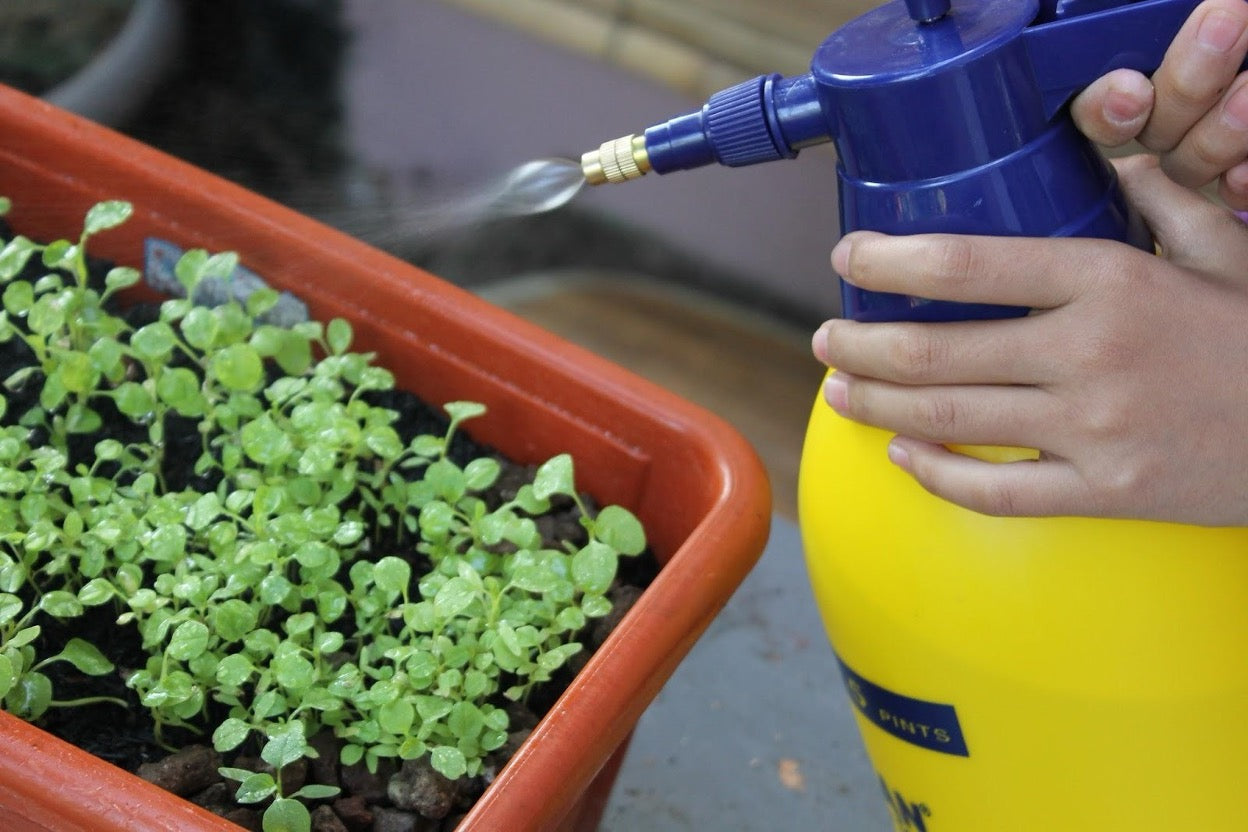
Mix in a Clean Pump Sprayer: Use a dedicated sprayer or one that's been thoroughly rinsed to avoid cross-contamination from herbicides or other chemicals. Shake or agitate the solution until it's fully blended.
-
Spray Both Sides of the Leaves. Coat the tops and undersides of foliage until the solution begins to drip. Hitting the undersides is critical because that's where the majority of stomata are located and where absorption happens fastest.
-
Repeat once per week: Apply on a weekly schedule throughout the active growing season for consistent results. Early morning or late afternoon is ideal to avoid rapid evaporation and give the solution time to absorb before the direct sun hits the leaves.
Soil Drench

A soil drench works well for fruiting vegetables and lawns.
A soil drench delivers liquid kelp directly to the root zone, where it improves soil biology, feeds beneficial microbes, and stimulates root growth from below.
-
Mix the Solution: Add 2–4 oz of liquid kelp per gallon of water. Use the lower end (2 oz) for regular maintenance feedings and the higher end (4 oz) for heavy-feeding plants, mid-season fruiting crops, or soil that hasn't been amended recently.
-
Apply Slowly at the Base of Each Plant: Pour the solution directly around the root zone rather than splashing it across open soil. Go slow enough that the liquid soaks into the ground rather than pooling on the surface or running off. You want it moving down into the root system, not sideways.
-
Let the Soil Absorb Fully Before Watering Again: Avoid immediately following up with heavy irrigation, which can dilute the solution and push it past the root zone before the microbes and roots have time to take it in.
-
Repeat Every Two to Four Weeks: Maintain this schedule throughout the active growing season. Every two weeks is ideal for fruiting vegetables and high-demand plants; every four weeks is sufficient for lawns, perennials, and established shrubs.
Hydroponics
Liquid kelp integrates seamlessly into hydroponic setups. Because hydroponic plants rely entirely on their nutrient solution for everything they need, the trace minerals and growth hormones in kelp fill nutritional gaps that standard hydroponic formulas often miss.
-
Measure the Concentrate: Add 1 teaspoon of liquid kelp per gallon directly to your nutrient reservoir. This is a lower ratio than for soil or foliar applications because hydroponic roots are constantly in contact with the solution.
-
Add Kelp with Each Water Change: Every time you refresh or top off your reservoir, mix in a fresh dose at the same 1 teaspoon per gallon rate. This keeps trace mineral and hormone levels consistent rather than letting them deplete between changes.
-
Monitor Over Time: Kelp will darken the water in your reservoir. This is completely normal and not a sign of contamination or over-application. Judge the health of your solution by pH and EC readings, not by color.
-
Check pH After Adding: While kelp's natural alginates can help buffer minor pH swings, it's still good practice to test your solution after mixing and adjust as needed before the next feeding cycle reaches your plants.
Best Time of Day to Apply and What to Avoid
Timing your liquid kelp applications correctly is just as important as getting the dilution right. The best window for foliar sprays is early morning or late afternoon, when plant stomata are open, and temperatures are cooler.
Avoid applying immediately before rain. A good rule of thumb is to wait at least 4 hours after application before expecting rainfall; otherwise, your spray simply washes off before it can work.
Also, avoid applying foliar kelp to drought-stressed plants in direct sun. Rehydrate them first with a plain water drench, wait a day, and then apply your kelp spray once the plant has stabilized. This prevents any potential concentration burn on already-stressed leaf tissue and ensures the plant is in the right physiological state to actually use what you're giving it.
Get Your Organic Liquid Kelp at GS Plant Foods

GS Plant Foods’ Organic Liquid Kelp is OMRI-listed.
Stronger roots, better nutrient uptake, improved stress resistance, and healthier soil biology start with choosing the right kelp product. GS Plant Foods Organic Liquid Kelp is cold-processed from Ascophyllum nodosum seaweed harvested in the clean North Atlantic waters of Norway.
The cold-processed method of extraction preserves the full spectrum of over 60 trace minerals, natural growth hormones like cytokinins and auxins, and essential micronutrients that heat-processed alternatives often destroy. Plus, our Liquid Kelp is OMRI-listed, safe for edible plants and organic gardens, and works on everything from vegetable beds and lawns to houseplants and container crops.
We offer free shipping, and every order ships directly from our facility within 1–2 days, so you're always getting a fresh product, not one that's been sitting on a warehouse shelf, losing potency. And if you want even more feeding power, we also offer a Fish & Kelp Liquid Blend that pairs the same Norwegian Ascophyllum nodosum with hydrolyzed fish fertilizer for a complete 2-3-1 NPK profile plus beneficial microbes.
Ready to give your plants a treat? Try GS Plant Foods Liquid Kelp today.
Frequently Asked Questions (FAQs)
Can I use liquid kelp on all types of plants?
Yes. Liquid kelp is safe and beneficial for virtually every plant type. Vegetables like tomatoes, peppers, cucumbers, zucchini, broccoli, and leafy greens respond especially well, showing improved yields and stronger foliage.
It also works equally well on flowering plants, fruit trees, herbs, houseplants, and lawn grass.
How often should I apply liquid kelp during the growing season?
For foliar sprays, apply once per week during the active growing season; for soil drenches, every two to four weeks is sufficient for most plants.
If you're pushing for maximum yield on heavy-feeding crops like tomatoes or peppers, you can drench every two weeks and do weekly foliar sprays simultaneously.
Can liquid kelp be mixed with other fertilizers?
Yes, and it actually performs better that way. Liquid kelp pairs exceptionally well with fish emulsion fertilizers.
The GS Plant Foods Fish & Kelp Liquid Blend (NPK 2-3-1) combines both into a single, ready-to-use product that delivers macronutrients from the fish and bioactive compounds from the kelp.
Is GS Plant Foods’ Organic Liquid Kelp pet-friendly?
Absolutely. GS Plant Foods Organic Liquid Kelp Seaweed is made from a single natural ingredient with no synthetic chemicals, toxic preservatives, or artificial additives. As such, it is considered safe around pets once it has dried or been absorbed into the soil.
Notably, all our products are also child-friendly, eco-friendly, and non-toxic.
*Disclaimer: This information is for educational purposes only. Always follow product label instructions and consult with qualified professionals for advice specific to your region, climate, and growing conditions. Individual results may vary based on environmental factors, soil conditions, plant species, and care practices. For specific product recommendations and application rates, visit GS Plant Foods.


Share:
Humic Acid for Vegetable Gardens: Benefits & How to Use
Fertilizing Conifer Plants: A Complete Guide to Healthy Evergreens