

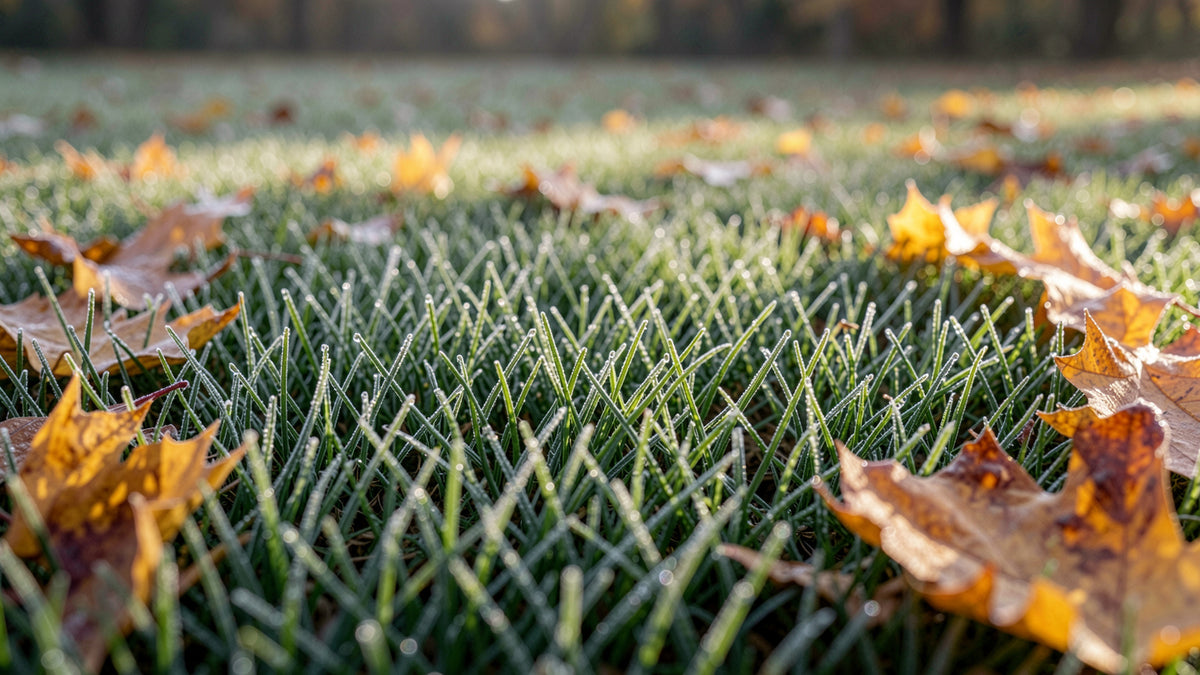
A winterizer fertilizer should fortify root reserves and harden cell walls rather than force tender leaf growth right before freezing weather arrives. Cool-season grasses absorb potassium and micronutrients until soil temperatures drop below 40 degrees Fahrenheit, while warm-season lawns require stopping nitrogen four to six weeks before the first historical freeze to prevent severe winterkill.
Standing in the yard in autumn, spreading a heavy bag of chemical granules to keep blades bright green until Thanksgiving feels productive. Forcing late leaf growth as daylight shrinks works directly against plant biology. True winter survival relies on durable cell walls, deep root carbohydrate storage, and active soil biology that protect crowns through freezing winter conditions.
What Winterizer Fertilizer Does for Your Lawn
Garden center marketing often treats late-season feeding as an excuse to push quick-release nitrogen. Retail bags frequently feature NPK ratios like 24-4-12 or 22-1-10, as compiled in regional lawn extension notes from Cooperative Extension. These formulas rely on synthetic urea to force cosmetic green color right before the ground freezes. Effective autumn turf care focuses on cellular hardening and subterranean carbohydrate storage rather than blade growth.
As daylight shortens and temperatures decline, turf shifts energy away from vertical foliage and into crown development. Supporting that process calls for potassium, humic extracts, and trace minerals rather than heavy leaf stimulants. To build a reliable seasonal feeding routine suited to your climate, our custom lawn program delivers clear schedules matched to natural growing windows.
Root Hardening Versus Foliar Surge
Potassium functions inside the plant much like cellular antifreeze. It regulates internal water pressure, strengthens cellular walls, and thickens the outer membrane around the crown. These fortified tissues resist cellular rupturing when moisture inside the plant freezes during cold snaps. Flooding turf with synthetic nitrogen late in the season produces soft, watery leaf tissue that collapses under cold stress. Late-season nutrition belongs in the root zone so grass enters dormancy with dense carbohydrate reserves.
Why Soil Temperature Dictates Nutrient Intake
Lawn care timing should follow real ground temperatures rather than a calendar date. Grass responds to soil heat, not midday air temperature. Cool-season turf continues root respiration and nutrient uptake after vertical blade growth stops, provided the soil stays above 40 degrees Fahrenheit. Once the top two inches of ground freeze solid, vascular systems shut down. Any fertilizer applied across frozen topsoil sits idle until cold rains or melting snow wash it into neighborhood storm drains.
When to Apply Fall Fertilizer Across Different Grass Types
Grass species process cold weather on different physiological timelines. Applying fall inputs without knowing whether your lawn is cool-season or warm-season can cause extensive turf dieback.
| Turf Classification | Common Grass Species | Application Timing Window | Primary Nutrient Objective | Cutoff Indicator |
|---|---|---|---|---|
| Cool-Season Turf | Kentucky Bluegrass, Tall Fescue, Perennial Ryegrass | Mid-October through early November | Potassium, humic compounds, slow-uptake nutrition | Soil drops consistently below 40°F or topsoil freezes |
| Warm-Season Turf | Bermuda, St. Augustine, Zoysia, Centipede | Late summer through early autumn | Potassium only; zero late nitrogen | 4 to 6 weeks before the historical first frost |
Cool-Season Turf Application Timing
Cool-season grasses dominate northern states and transition zones. A seasonal timing review by the Farmers' Almanac outlines how university recommendations shift by latitude. University of Minnesota Extension notes the primary fall fertilization period for northern lawns runs from early August through mid-October. Further south, Iowa State University Extension recommends cool-season applications through late October or early November before ground freezes. Penn State Extension advises that late-fall feeding can continue into November after top growth stops, as long as the ground remains unfrozen.
Warm-Season Turf Dormancy Guidelines
Warm-season lawns require a different strategy. Applying nitrogen-heavy winterizer to Bermuda, St. Augustine, or Zoysia in late autumn often causes preventable winterkill. Pushing tender vegetative growth when the grass should enter dormancy leaves crowns fragile when frost hits. Texas A&M AgriLife Extension recommends completing final nitrogen applications four to six weeks prior to the historical first frost date. University of Georgia Extension warns warm-season lawn owners to stop late nitrogen entirely to prevent elevating winter disease susceptibility. Any late input must prioritize root-strengthening potassium.
Why Liquid Turf Nutrients Outperform Synthetic Granular Pellets
Conventional fertilizer prices jumped sharply across the United States in 2026. A survey from the American Farm Bureau Federation found that 70% of surveyed farmers reported difficulty affording complete fertilizer needs under mounting input costs. Homeowners face comparable price spikes when purchasing commercial granular bags at retail centers.
Beyond expense, high-analysis chemical granules present practical agronomic problems in late fall. Switching to biological liquid feeds avoids salt build-up while conditioning the soil ahead of sub-freezing temperatures.
The Risk of Chemical Salt Accumulation
Granular synthetic fertilizers rely on mineral salts to carry synthetic nutrients. In cold autumn soils with declining biological activity, these salts dissolve slowly. If rainfall is light, granules sit on the surface, pulling moisture directly out of root crowns and scorching tender growth. Over-fertilizing in late fall leads to nutrient burn and salt accumulation, which is why extension guidelines recommend modest application rates to protect root tissue.
Dual Foliar and Root Uptake
Biological liquid inputs feed through both leaf tissue and the root zone. Leaves take in micronutrients through open stomata within hours, while excess liquid filters down to feed beneficial soil microbes. Using a formulation like Green Envy Lawn Turf Superfood supplies potassium, kelp, and humic extracts that support root cell elasticity without salt crusting or forced top growth.
How to Apply Liquid Winterizer Fertilizer Step by Step
Spraying liquid nutrition across a standard quarter-acre lawn takes about thirty to forty minutes. Following this procedure protects nutrients from washing away before soil freezes.
-
Check Soil Temperature and Compaction
Push a soil thermometer three inches deep into the turf during morning hours. Cool-season roots take up nutrients efficiently until the soil drops consistently below 40 degrees Fahrenheit. If foot traffic left the ground compacted over summer, liquid will run off instead of sinking down. Applying Soft Soil liquid soil aerator loosens tight particles and opens pathways for moisture and food.
-
Dilute and Calibrate the Sprayer
Calculate your lawn square footage to match your liquid concentrate volume. A calibrated tool like the Bonide Auto Mix hose end sprayer siphons the correct ratio as water runs through your garden hose. Guessing rates leads to uneven coverage and patchy spring growth.
-
Spray Over Lightly Moist Turf
Walk the turf in overlapping passes with the nozzle two feet above the blades. Apply early in the day after morning dew has dried, ideally the day after light rainfall when moist soil holds nutrients in the root zone. Avoid spraying right before heavy storms that wash foliar inputs away.
-
Allow Leaf and Root Absorption
Chemical fertilizer pellets require heavy watering right away to prevent severe blade burn, but liquid organic formulas do not require an emergency drenching. Let the turf rest undisturbed for several hours so leaves absorb micronutrients. Light autumn rains will move remaining trace elements down to root microbes.
Fall Lawn Mistakes That Increase Winterkill and Disease
Timing and product choice decide whether grass wakes up healthy or damaged in spring. Steering clear of these three common errors protects roots through deep dormancy.
- Forcing Late Foliar Growth With Nitrogen: Applying quick-release nitrogen in late October bloats blade tissue with water. When heavy snow blankets succulent foliage, the canopy collapses into a wet, dark mat. This creates the humid environment that pink and gray snow mold fungi need to rot crowns before spring.
- Spraying Over Frozen Ground: When the top two inches of topsoil freeze solid, roots cannot absorb macro-nutrients. Applying fertilizer over frozen ground wastes money and allows surface runoff to carry nutrients straight into local waterways.
- Adding Potassium to Soils That Already Have Plenty: Potassium strengthens cell membranes, but University of Minnesota Extension notes that adding extra potassium in a winterizer provides minimal benefit if soil levels are already sufficient. If your soil test shows solid potash reserves, pairing modest feeding with organic liquid humic acid unlocks bound soil minerals without overloading the ground.
Frequently Asked Questions
When should you apply winterizer fertilizer to a cool-season lawn?
Apply in mid-to-late autumn after vertical blade growth stops but while soil temperatures remain above 40 degrees Fahrenheit, usually from mid-October to early November. This lets roots store carbohydrates without forcing tender foliage that freezes and rots under snow. Put the sprayer away once the top two inches of topsoil freeze solid.
Can you put winterizer fertilizer on Bermuda or St. Augustine grass?
Do not apply standard nitrogen-heavy winterizer to warm-season lawns in late autumn. Warm-season grasses need to enter dormancy naturally, so final nitrogen feeding must wrap up four to six weeks before the first historical freeze. Any late-season input should focus strictly on root-strengthening potassium rather than nitrogen.
Does liquid winterizer fertilizer need to be watered in immediately?
Liquid organic formulas do not require immediate drenching because they lack the harsh chemical salts that scorch grass blades. Applying when the ground is lightly moist allows leaves to absorb nutrients within hours while the remaining spray filters down to feed root microbes. Avoid heavy automatic irrigation right after spraying so foliar nutrients remain on the blades.
Why does high nitrogen in late fall cause snow mold?
Late nitrogen forces tender, moisture-bloated leaf tissue right before freezing weather arrives. When snow blankets this soft growth, the leaves collapse into a damp mat that creates the exact dark, humid conditions fungal pathogens require. Hardening turf with potassium and humic inputs builds dense cell walls that resist rotting under winter snowpack.
Is it too late to fertilize if the ground is already frozen?
Yes, once topsoil freezes solid, vascular root systems close down and cannot absorb macro-nutrients. Any fertilizer spread over frozen ground sits on the crust and washes away with winter rain or melting snow. Save your fertilizer budget and resume applications in early spring when soils warm back up.
To fortify your lawn root systems with clean, natural nutrients before freezing ground sets in, explore Green Envy Lawn Turf Superfood, backed by free shipping on every order.


Share:
What Does Wintering Mean for Your Lawn and Garden in 2026?
Organic Fish Fertilizer: Application Rates and Odor Guide