


Cold-enzymatic organic fish fertilizer supplies bioavailable nitrogen and trace minerals within 48 hours without lingering household odor when diluted to one teaspoon per gallon indoors or two tablespoons outdoors. Because cold enzymatic digestion retains intact marine proteins without scorching oils, its mild scent dissipates in moist soil within two to four hours while avoiding root burn.
Growers frequently hesitate to feed pale container herbs or autumn crops because they dread filling the living room with a putrid marina odor or scorching tender root systems. No genuine, unadulterated fish concentrate is completely odorless inside the jug. However, the persistent stench people dread comes almost entirely from industrial cooking methods used to make old-fashioned emulsions, not from high-grade hydrolysates. When applied properly to damp soil, a cold-digested liquid feeds soil biology cleanly, leaves no lasting odor in living areas, and will not attract nuisance pests to outdoor beds.
How Does Cold Enzymatic Hydrolysate Differ from Traditional Fish Emulsion?
The difference between heat-cooked emulsion and cold enzymatic hydrolysate comes down to manufacturing temperature and nutrient preservation.
Heat-Cooked Emulsion Versus Cold Hydrolysate
Traditional fish emulsion is an industrial byproduct. During the commercial manufacturing of fish meal and cosmetic fish oils, fish remnants are boiled under high industrial heat and treated with sulfuric or phosphoric acid to separate oils and break down flesh. This aggressive thermal process chars fragile marine proteins, scorches residual fats, and strips away natural vitamins. The result is a thick, gummy liquid containing denatured nitrogen and high levels of sulfurous compounds that produce an aggressive, rancid odor that lingers for days after application.
Cold enzymatic fish hydrolysate preserves the whole fish. Instead of using boiling vats and industrial acids, whole marine fish are ground and digested at ambient room temperatures using naturally occurring enzymes. This gentle biological digestion liquefies the fish without heat degradation, preserving complex amino acid chains and marine oils intact. A cold hydrolysate carries an earthy, oceanic scent inside the container rather than a sour, burnt stench. Its proteins remain biologically functional for immediate use by soil microbes.
Preserving Marine Oils and Chelated Amino Acids
When natural marine oils and fatty acids remain intact, they act as an energy source for beneficial fungi and bacteria in the root zone. In contrast to synthetic fertilizers that feed the plant while starving the substrate, enzymatically digested fish feeds the surrounding soil food web. Combining this cold-processed input with marine plant extracts, such as our Fish and Kelp Fertilizer Organic Liquid Blend, supplies both bioavailable nitrogen and ocean minerals that fortify plant cell walls against seasonal cold snaps.
Does Organic Liquid Fish Fertilizer Smell Bad Indoors?
A common concern is whether you can use liquid fish fertilizer on indoor potted plants without creating an unbearable living environment. The short answer is yes, provided you understand how soil microbes process the liquid.
Indoor Potting Soil Odor Dynamics
Any genuine liquid fish concentrate has an earthy, marine aroma when you unscrew the cap. If a product claims zero scent straight from the bottle, the manufacturer has either masked it with synthetic agents or diluted the inputs to water. However, when diluted into water and drenched into an active potting mix, the aroma dissipates within two to four hours. Active soil bacteria immediately bind to and consume the natural organic compounds, effectively neutralizing volatile scent molecules. Persistent indoor odor only occurs if the concentrate is applied undiluted, if the room has stagnant air, or if the potting medium is waterlogged and anaerobic.
Fall Herb Transition Protocol
In October, many growers dig up or bring outdoor container herbs like parsley inside before hard frosts arrive. Using Organic Liquid Fish Fertilizer during this transition requires adjusting the concentration. Outdoor herbs entering lower indoor light conditions do not need high-volume nitrogen. Pushing heavy growth with full-strength outdoor doses produces weak, leggy stems that attract fungus gnats and spider mites. Cut the rate to one teaspoon per gallon of water once every three to four weeks, and ensure the room has adequate airflow during the initial two hours after watering.
Can Liquid Fish Fertilizer Burn Sensitive Roots or Seedlings?
Unlike synthetic starter feeds, organic hydrolysates have a very low salt index and will not chemically scorch root tissue when applied at recommended rates. However, root damage can still happen if you ignore basic soil moisture rules.
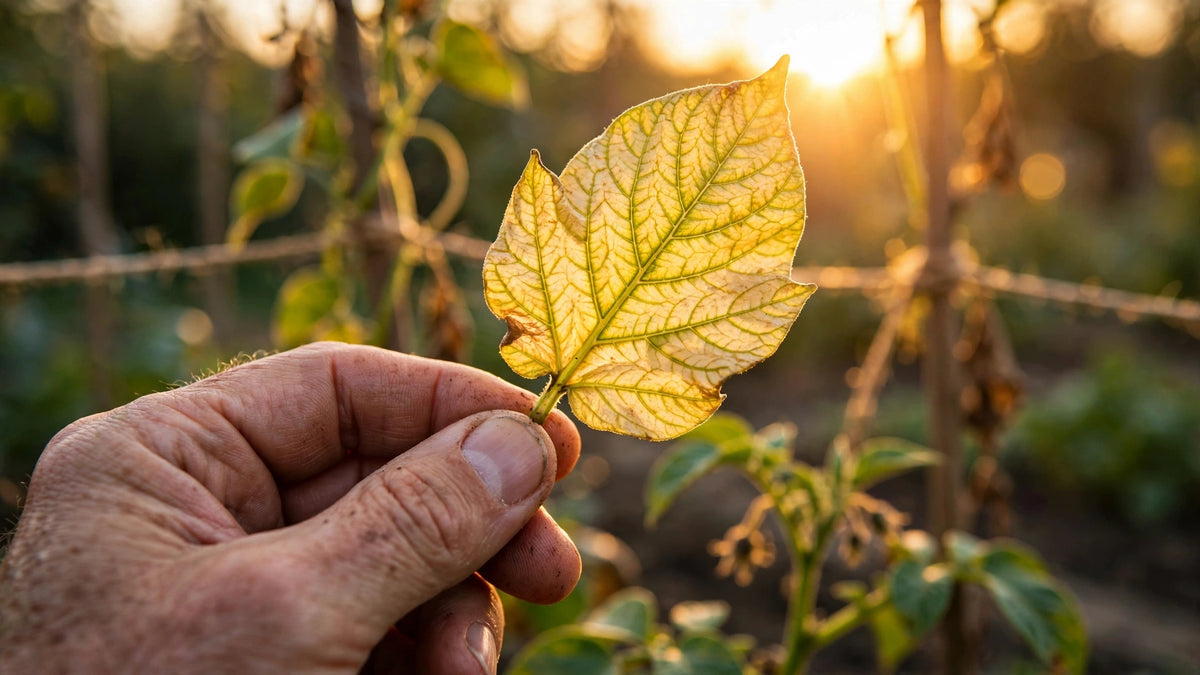
The most destructive mistake a grower can make is pouring liquid fertilizer onto bone-dry potting soil. When root hairs are dehydrated, their cellular membranes are compromised. If hit with a concentrated dose of organic nutrients, those desiccated tissues absorb the liquid too rapidly, causing severe osmotic shock and root dieback. If you are trying to tell whether yellowing foliage is from drought stress or hunger, reviewing how to diagnose mixed symptoms from overwatering and underfeeding will help you spot root distress before feeding.
To safely feed sensitive root systems and seedlings, follow this step-by-step checklist:
- Check soil moisture: Insert a finger or moisture meter into the container or bed. If the top two inches are dry and dusty, do not apply fertilizer yet.
- Pre-water thoroughly: Water your plants with plain, clean water 30 to 60 minutes before feeding. This hydrates the root hairs and creates uniform moisture pathways through the soil.
- Measure the correct dilution: Use one teaspoon per gallon of water for indoor houseplants and tender seedlings. For established garden beds and outdoor containers, use one to two tablespoons per gallon.
- Mix and agitate: Stir the liquid thoroughly so the hydrolysate stays completely suspended in the water.
- Drench the root zone: Pour the diluted mixture evenly around the base of the plant until the potting medium is damp, stopping before liquid pools heavily in the drainage saucer.
How Quickly Do Plants Show Visible Growth from Liquid Fish Fertilizer?
Growers looking for rapid greening often ask: How long does it take for liquid fish fertilizer to show visible plant growth? Liquid hydrolysates work faster than granular organic meals because the nutrients are already in solution and bound to bioavailable amino acids.
A 2026 agricultural trial published in Scientific Reports evaluated the effects of liquid organic fertilizers derived from fermented fish waste on leafy spinach. The researchers found that liquid fish waste formulations at 40 ml to 50 ml concentrations significantly accelerated leaf expansion, elevated photosynthetic pigments, and increased tissue accumulation of essential trace minerals within days of application, matching conventional synthetic inputs without toxic salt accumulation. Understanding how amino acids benefit garden productivity explains why these natural chelates allow plants to absorb nutrients rapidly without expending extra metabolic energy.
Uptake Timeline for Foliar Spraying and Root Drenching
- Foliar absorption (24 to 48 hours): When misted onto the undersides of leaves where stomata are concentrated, free amino acids and nitrogen enter plant tissue directly, noticeably deepening pale yellowing foliage to dark green within two days.
- Microbial conversion (48 to 72 hours): Applied as a soil drench, marine proteins stimulate native mycorrhizae and beneficial bacteria, which break organic nitrogen down into forms roots can readily pull into the vascular system.
- Vegetative surge (5 to 7 days): New shoots and root expansion emerge within one week of application as the root system redistributes stored nitrogen and minerals. For broader root growth support, rotating with Organic Liquid Kelp Seaweed provides trace potassium and natural growth hormones.
Avoiding Midday Leaf Scorch
If you choose foliar feeding, never spray during midday sun. Water droplets mixed with natural fish oils sit on the leaf surface and act like tiny magnifying lenses under direct sunlight. This scorches leaf margins and damages photosynthetic tissue. Always apply foliar sprays in the early morning at dawn or late in the evening when the sun is off the foliage.
Which Plants Do Not Like Fish Fertilizer?
Liquid fish fertilizer excels at promoting lush, dark-green vegetative growth. Because it naturally delivers readily available nitrogen, it works well for leafy greens and active turf. However, certain plants react poorly to high-nitrogen inputs at specific points in their lifecycle.
| Plant Category | Suitability | Application Rule and Risk |
|---|---|---|
|
Leafy Greens & Brassicas (Spinach, kale, lettuce, broccoli) |
Excellent | Apply 1 to 2 tablespoons per gallon every two weeks throughout the season to encourage broad, tender leaf expansion. |
|
Fruiting Crops in Bloom (Tomatoes, peppers, squash) |
Avoid during bloom | Nitrogen signals vegetative growth. Flooding blooming crops with fish causes blossom drop and lush vines with zero fruit. Switch to our recommended organic tomato fertilizer schedules during flowering. |
|
Desert Succulents & Cacti (Echeveria, jade, opuntia) |
Not recommended | These plants are adapted to low-nitrogen, arid environments. Organic fish hydrolysate can soften cell walls, attract pests, and cause root rot. |
|
Dormant Perennials & Shrubs (Late fall garden ornamentals) |
Avoid in late autumn | Applying nitrogen in October to outdoor woody perennials forces late tender growth that fails to harden off before hard freezes kill the stems. |
|
Heavy-Feeding Container Herbs (Basil, mint, parsley) |
Good during active growth | Drench at half-strength (1 teaspoon per gallon) every three weeks. Flush soil periodically to prevent organic residue buildup. |
How Can You Prevent Raccoons and Pets from Digging Up Treated Beds?
Raccoons and neighborhood dogs have sharp noses and are drawn to the scent of real marine oils. In an article published on April 25, 2022, Chris Enroth of University of Illinois Extension noted that raccoons frequently excavated patio containers and freshly drenched garden beds after fish fertilizer applications, mistaking the marine aroma for buried food.
Drench the soil directly at the root crown instead of spraying surrounding mulch or foliage where scent lingers in open air. As soon as you apply the drench, top-dress the area with a one-inch layer of clean compost or an organic soil builder like Turbo Soil Bio-Blend to physically trap marine scent beneath the surface. For outdoor raised beds and market gardens managed under our Vegetable Farm Program, pinning down a lightweight floating row cover over treated beds for 24 to 48 hours keeps raccoons and dogs from reaching the soil while active microbes break down surface scent compounds.
Frequently Asked Questions
Can I use liquid fish fertilizer on indoor potted plants without creating a persistent odor?
Yes. When diluted to one teaspoon per gallon and applied to pre-moistened potting soil, cold-enzymatic fish hydrolysate carries a mild marine aroma that dissipates within two to four hours. Active soil microbes bind and consume the organic compounds, preventing lingering smells in living spaces.
How long does it take for liquid fish fertilizer to show visible plant growth?
Foliar sprays show results within 24 to 48 hours as leaves absorb amino acids and nitrogen directly through their stomata. Soil drenches take three to five days for microbial breakdown and root uptake, producing visibly greener leaves and new growth within one week.
Will applying organic fish fertilizer outdoors attract raccoons, stray cats, or dogs?
Fresh marine oils can draw curious animals to newly treated garden beds. Applying the liquid as a direct root drench and covering the soil with an inch of fresh mulch or a temporary floating row cover for 24 to 48 hours blocks the scent until microbes process it.
Which plants do not like fish fertilizer?
Avoid applying fish fertilizer to fruiting vegetables like tomatoes and peppers once they are actively setting blossoms, as excess nitrogen prompts leaf growth over fruit set. Desert succulents and dormant late-fall perennials should also not receive high-nitrogen fish feeds.
What is the best liquid fish fertilizer?
The best liquid fish fertilizer is an enzymatically digested cold hydrolysate rather than a heat-treated emulsion. Cold processing leaves the whole fish intact, preserving bioavailable amino acids, trace minerals, and natural oils without the scorched smell or denatured proteins of cooked products.
Share:
Bulb Fertilizer: What to Feed Spring Bulbs at Fall Planting
New Sod Starter Fertilizer: When and How to Feed Roots