

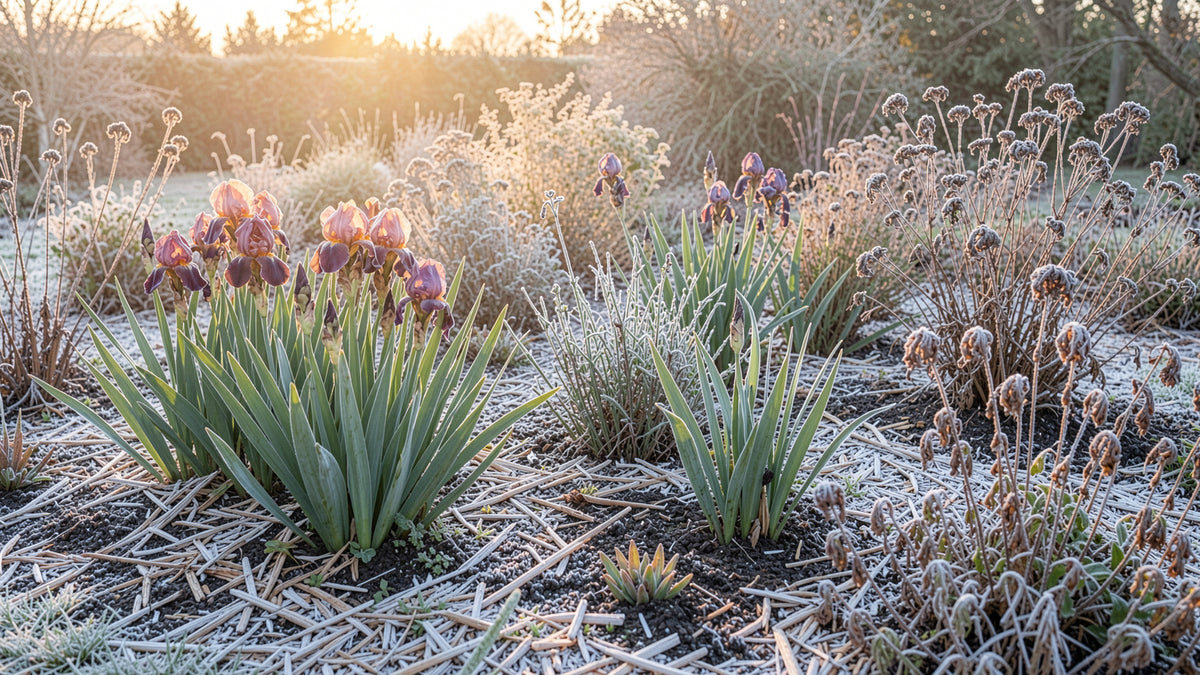
Feeding perennials high-nitrogen fertilizer as nights turn crisp forces tender growth that ruptures and kills crowns during the first hard freeze. A low nitrogen fertilizer rich in potassium and cold-water kelp halts succulent shoots, thickens cell walls, and builds natural sugars that protect root tissues through subfreezing winter dormancy.
When frost nips hostas and hydrangeas, garden beds do not need a growth push before the ground locks up. They need root protection without vegetative stimulation. Pouring standard all-purpose plant food on landscape ornamentals in mid-autumn is one of the most reliable ways to wipe out established rootstocks before spring.
Why Late Nitrogen Applications Cause Winterkill in Perennials
Nitrogen drives vegetative shoot elongation. A healthy plant typically contains 3% to 4% nitrogen in its above-ground tissues during peak summer growth. That concentration keeps cell walls soft to allow rapid expansion.
Late in the season, that growth habit becomes dangerous. When given high nitrogen in autumn, plants pump water into tender new shoots instead of preparing for rest. Free water trapped within those thin cell walls expands into ice crystals during the first hard freeze, puncturing internal membranes. Dieback travels straight down the vascular bundles into the woody crown, leaving a rotted mass by spring.
A common mistake is treating perennial flower beds like cool-season turf. Established turfgrasses can take up late-fall nitrogen to store energy while top growth slows, as covered in our guide on winterizer fertilizer timing. Perennial crowns require nitrogen levels near zero by mid-October so stems can complete vascular shutdown.
How Cell Walls Harden for Freezing Winter Temperatures
Cold hardening is an active physiological shift. Rather than going dormant passively, plants alter their internal sap chemistry to withstand subfreezing soil conditions.
Desiccation of Tender Above-Ground Tissue
As daylight shortens and nighttime temperatures hover in the 30s, the plant draws free water out of upper stems down into the root system. This controlled desiccation keeps ice from expanding inside structural tissues. Many growers apply a root drench of Kelp + Yucca root enhancer during this period to keep root membranes stable while moisture recedes from the canopy.
Accumulation of Intracellular Sugars and Osmoprotectants
After purging excess water, the plant concentrates its remaining fluids with soluble sugars and potassium ions. These compounds act like internal antifreeze, depressing the sap freezing point so fluids remain liquid well below 32 degrees Fahrenheit. Glycine betaines and related osmoprotectants keep cellular membranes pliable rather than brittle as the surrounding soil chills.
Why Liquid Kelp Protects Roots Better Than Dry Chemical Salts
Many gardeners grab dry zero-nitrogen powders like 0-20-20 or 0-10-10 bloom boosters for fall feedings. While these formulas lack nitrogen, their concentrated mineral salts present a serious risk to cooling soil.
Synthetic fall fertilizers rely on concentrated chemical salts like muriate of potash. When soil biology slows in late autumn, high salt levels draw water backward out of tender feeder roots through reverse osmosis. Chemical fertilizer runoff also creates broader environmental problems. A 2026 briefing by the Environmental and Energy Study Institute highlighted that agricultural runoff and fertilizer leaching account for major soil degradation and atmospheric losses, with agricultural nitrous oxide holding 273 times the warming potential of carbon dioxide over a 100-year timeline.
| Feature | Pure Cold-Water Liquid Kelp | Dry Synthetic Fall Salts (e.g., 0-20-20) |
|---|---|---|
| Burn and Dehydration Risk | Zero risk of chemical salt burn on tender root hairs | High risk of salt crusting and root desiccation in cold soil |
| Freezing Point Depression | Supplies natural betaines and potassium to lower sap freezing point | Supplies raw mineral potassium without protective biostimulants |
| Soil Biology Impact | Feeds mycorrhizae and soil microbes through winter dormancy | Can disrupt beneficial soil microbes under low temperatures |
| Nutrient Delivery Method | Gentle liquid drench readily absorbed by cooling roots | Requires heavy rainfall to dissolve granules, risking winter runoff |
Natural alternatives like Ocean Magic Sea Minerals provide winter resilience without salt crusting. Marine extracts deliver trace minerals, plant-available potassium, and biostimulants directly to roots without dehydrating fine hairs during seasonal moisture drops.
Why Bearded and Siberian Irises Need Low Nitrogen Before Frost
Bearded and Siberian irises require careful autumn management. Unlike deep taproots, iris rhizomes sit exposed at the soil surface.
Nitrogen pushes late foliar fans that keep rhizomes water-logged. That soft tissue invites bacterial soft rot (Pectobacterium carotovorum) during cold, wet months. Soft rot turns the rhizome core into mush, ruining the clump by spring.
Switching to low-nitrogen inputs prompts the rhizome to harden its outer cuticle. Applying cold-water kelp alongside Organic Liquid Humic Acid improves root anchoring, strengthens outer defenses against freeze cracks, and avoids the succulent foliage surge caused by standard formulas.
How to Apply Low Nitrogen Fertilizer by Hardiness Zone
Late feedings must reach active roots before the topsoil freezes into a solid crust. Match your liquid feeding schedule to your local frost outlook.
Check Local Hardiness Zone Frost Forecasts
Find your average first killing freeze. In USDA zones 4 and 5, this often hits by early to mid-October. In zones 6 and 7, it usually lands between late October and mid-November. Southern zone 8 gardens may not freeze until December. Schedule your final liquid application two to four weeks prior to this freeze date so roots absorb minerals while soil remains workable.
Dilute Marine Kelp and Potassium Soil Drench
Mix GS Plant Foods Organic Liquid Kelp at 2 ounces (4 tablespoons) per gallon of clean water. This concentration provides potassium and trace compounds without triggering soft vegetative shoots.
Saturate the Root Crown Zone Thoroughly
Drench the immediate base of each perennial, shrub, or iris clump using roughly one quart of finished mix per square foot of root area. If adding spring-flowering bulbs to the surrounding soil, align this root soak with the guidelines in our guide to bulb fertilizer at fall planting.
Stop Liquid Applications Once Soil Freezes
When nights consistently drop below 28 degrees Fahrenheit and the top two inches of soil freeze solid, stop all liquid applications. Root uptake ceases in frozen soil. Applying drench over frozen ground wastes material and risks creating ice sheets around the crown.
Visual Markers of True Perennial Dormancy
Plant signals are more reliable than the calendar for assessing dormancy. Watch the crown and foliage before making final winter preparations.
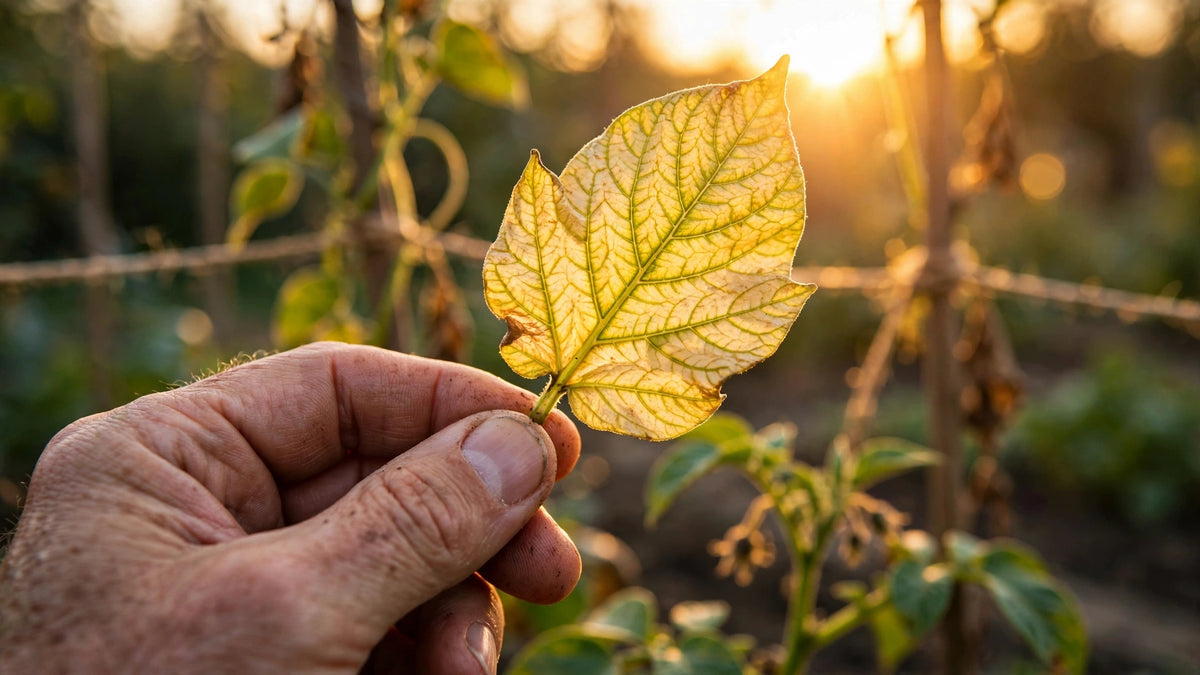
Natural yellowing is the first clear marker. When hostas or peonies turn yellow in October, do not treat the foliage with nitrogen. The plant is mobilizing stored nitrogen out of green leaves and pulling it down into the crown for winter storage.
Next, terminal buds firm up and active shoot growth ceases. Stems on woody ornamentals change from bright green to muted gray or brown as bark tissues lignify. Once top growth collapses, cut back dead foliage and let the crown settle.
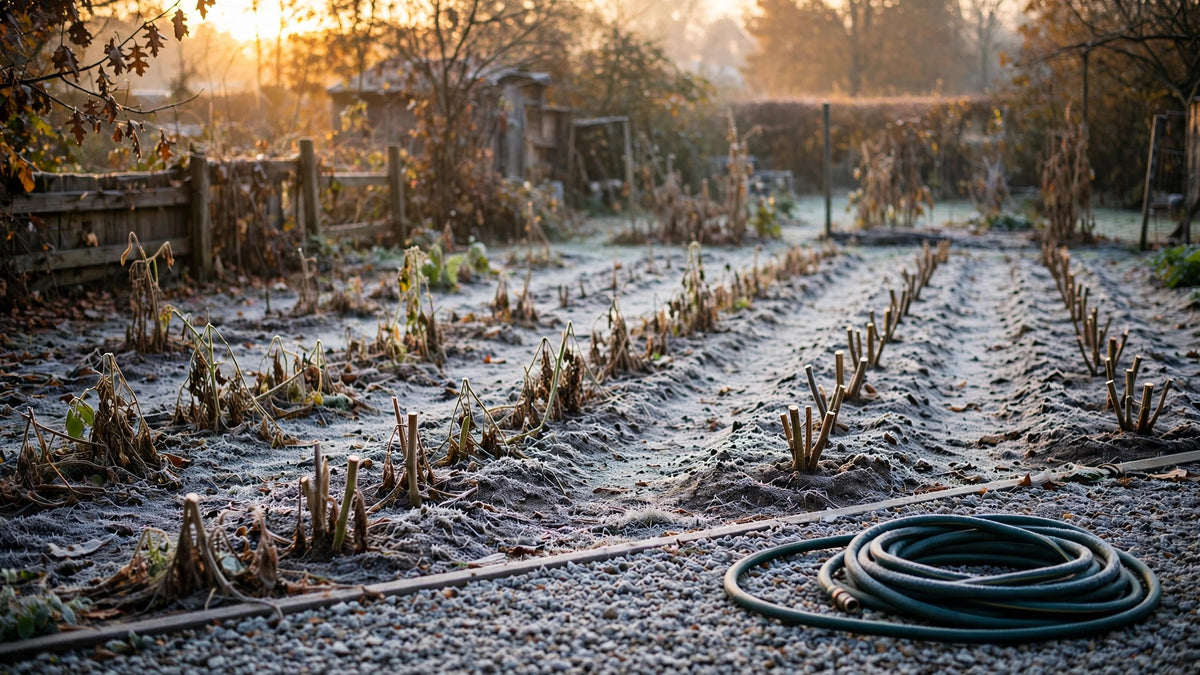
Wait until topsoil chills before spreading mulch. Mulching warm soil delays dormancy and attracts nesting rodents. After the first hard freeze, spread two to three inches of clean bark or straw over crowns to prevent frost heaving during freeze-thaw cycles.
Frequently Asked Questions
Why should I avoid nitrogen fertilizer on perennials in late autumn?
Nitrogen triggers succulent top growth packed with water. When soil temperatures plummet, this soft tissue freezes and ruptures, spreading cellular rot down into the perennial crown.
What makes low nitrogen fertilizer ideal for bearded and Siberian irises?
Irises store starches in surface rhizomes that soften quickly under late nitrogen feeding. Hardening the rhizome with potassium and low-nitrogen inputs prevents bacterial soft rot from invading during wet winters.
When should I make the final fertilizer application before winter?
Apply your final low-nitrogen root drench two to four weeks before the first hard killing freeze. Roots need workable, unfrozen soil to take up potassium and biostimulants before seasonal dormancy begins.
Can liquid kelp replace winter mulching in cold northern climates?
No. Liquid kelp lowers sap freezing points within roots, but it cannot prevent physical soil displacement. Clean organic mulch is still necessary to keep crowns from heaving out of the ground during midwinter freeze-thaw cycles.
To prepare your beds before freezing weather arrives, apply GS Plant Foods Organic Liquid Kelp while your soil remains workable so perennial crowns absorb protective potassium.
Share:
Bulb Fertilizer: What to Feed Spring Bulbs at Fall Planting
Organic Fish Fertilizer: Application Rates and Odor Guide